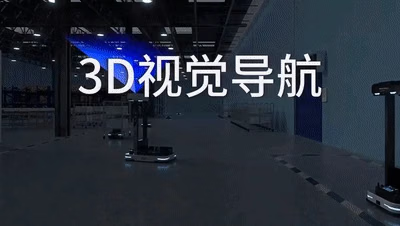
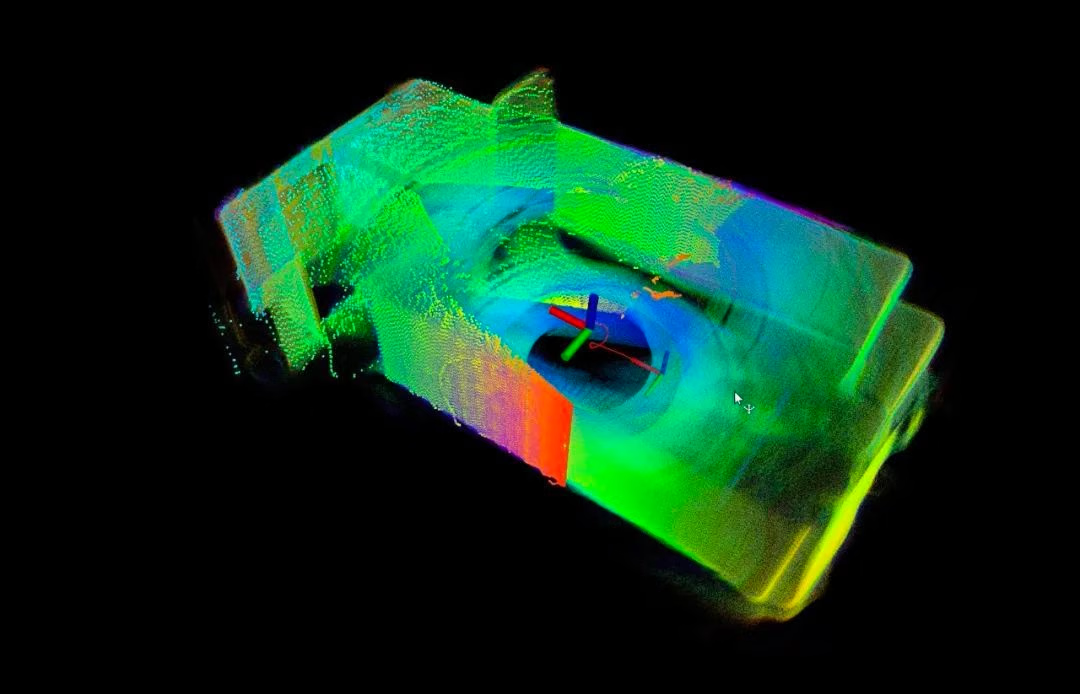
SLAM (simultaneous localization and mapping) lets a robot build a map and estimate its pose in an unknown or changing environment. In the MRDVS top-view SLAM solution, an RGB-D camera is mounted on top of the vehicle and uses ceiling and other overhead features for localization.
Solution characteristics
Compared with solutions that rely only on floor features, a top-view camera can reduce occlusion from floor cargo and people. It captures depth data above the vehicle and estimates the vehicle pose while building the map.
Application examples
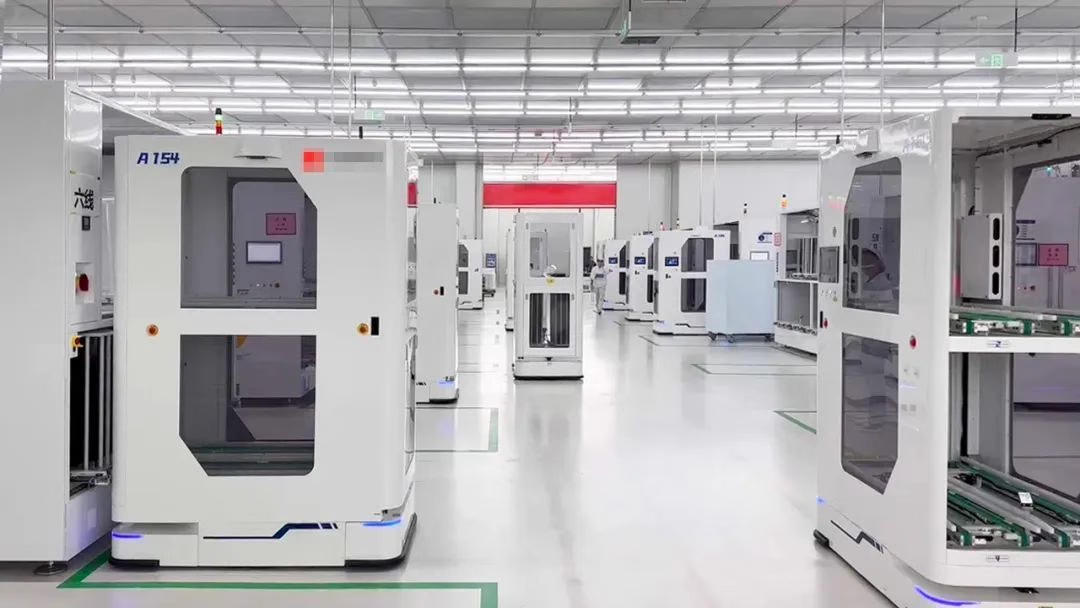
Photovoltaic manufacturing workshop
The production equipment and transport robots at this site were commissioned in stages, so the environment and traffic changed continuously. The project mounted a top-view SLAM module on an integrated transport robot to maintain stable positioning at machine docking points. Project records state that the two workshops covered about 80,000 m² and that more than 500 AGVs used the module during the recorded period.
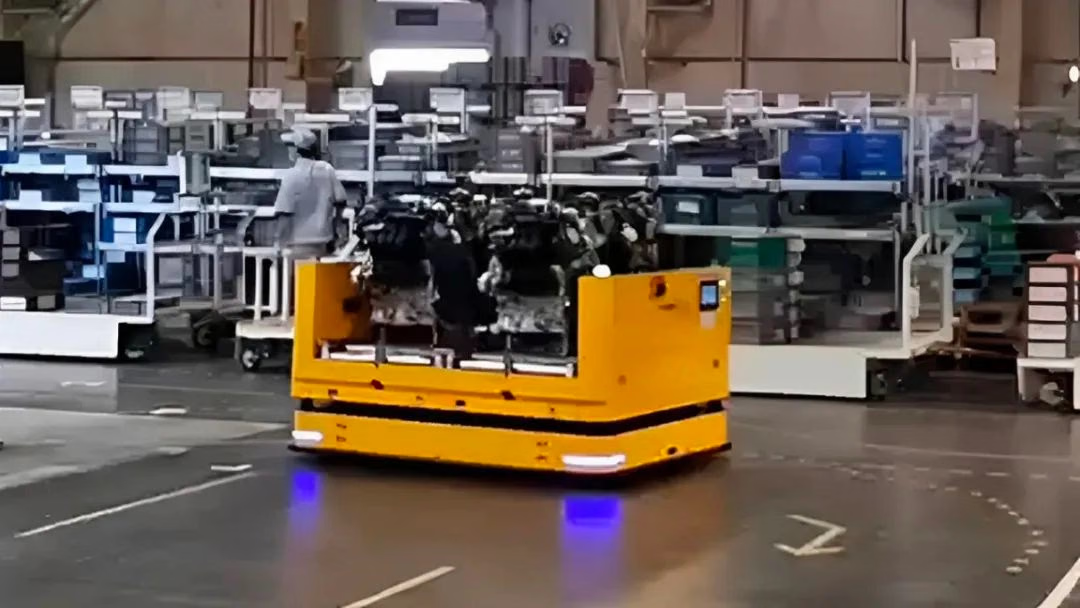
Automotive manufacturing workshop
This open workshop has fast-changing traffic from material carts, components, and personnel. The navigation sensor was mounted on top of a roller-conveyor transport AMR to localize engine-component transport.
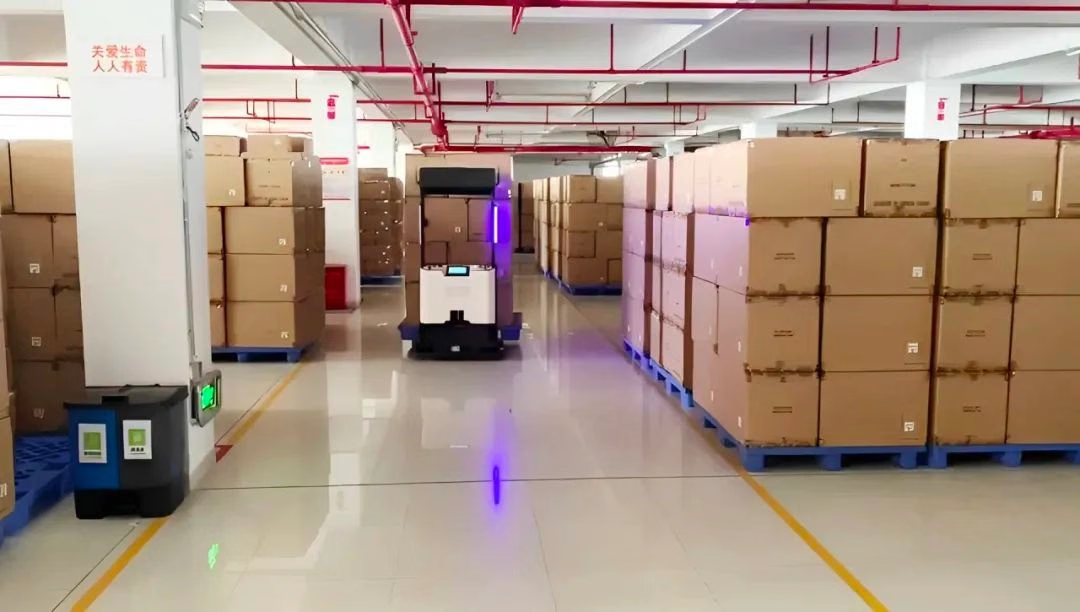
Floor-stacked garment warehouse
The warehouse has more than 4,000 storage locations with narrow spacing and frequently changing inventory. The navigation module was installed on top of an AGV forklift for pallet transport localization.
Before deployment, validate overhead-feature coverage, field-of-view occlusion, map updates, vehicle vibration, and the relocalization workflow.